
Have you tried everything to fix your skin—expensive creams, harsh treatments, dermatologist visits—but nothing works?
The problem isn’t your skincare routine. It’s not even your skin.
It’s your gut.
Groundbreaking research has revealed something dermatologists are just beginning to understand: your skin is a mirror of your gut health. When your gut bacteria are out of balance, it shows up as acne, wrinkles, redness, dullness, and premature aging—no matter what you put on your face.
This explains why topical treatments only provide temporary relief. You’re treating the symptom, not the cause.
85% of skin problems are caused by gut bacteria imbalance—not external factors
📋 Table of Contents
What Is the Gut-Skin Connection?
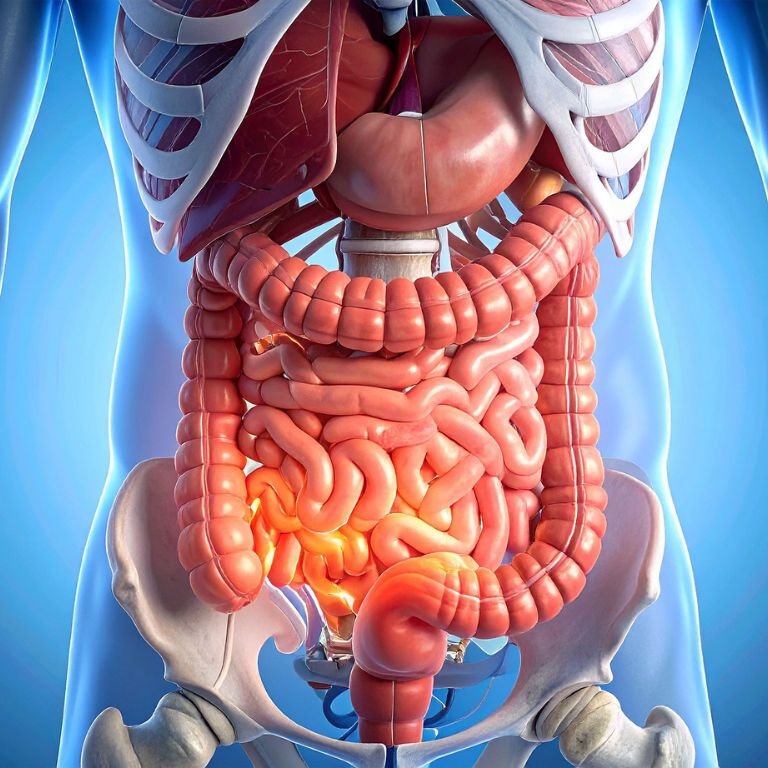
The gut-skin axis is the direct communication pathway between your intestinal bacteria and your skin cells. When your gut microbiome is healthy, it produces compounds that keep your skin clear, glowing, and youthful. When it’s damaged, it triggers inflammation that manifests as visible skin problems.
Here’s what most people don’t know: your gut contains 70% of your immune system. When harmful bacteria outnumber the good ones, your immune system goes haywire—producing inflammatory molecules that travel through your bloodstream directly to your skin.
This is why you can use the most expensive skincare products in the world and still have skin problems. You’re fighting a battle on the wrong front.
Your skin problems aren't caused by external factors—they're signals from your gut. Fix your gut bacteria, and your skin transforms automatically.
5 Skin Problems That Start in Your Gut
How do you know if gut bacteria are causing your skin issues? Watch for these telltale signs:
1. Persistent Acne (Especially After Age 30)
If you’re dealing with acne well past your teenage years, it’s almost always gut-related. Adult acne is triggered by inflammatory compounds produced by harmful gut bacteria. These travel through your bloodstream and cause your sebaceous glands to overproduce oil.
Think about it: teenagers have acne because of hormones. But if you’re 35, 45, or 55 with acne, hormones aren’t the problem anymore. Your gut is.
Studies show that people with acne have significantly different gut bacteria than those with clear skin. Specifically, they have higher levels of inflammatory bacteria and lower levels of protective strains.
2. Redness, Rosacea, or Constant Inflammation
Chronic redness and rosacea are classic signs of gut inflammation. Studies show that people with rosacea have 10x more harmful gut bacteria than those with clear skin. The inflammation in your gut literally shows up on your face.
Rosacea isn’t a skin condition—it’s a gut condition with skin symptoms. This is why topical treatments never work long-term. You’re putting out fires on your face while the real fire burns in your gut.
3. Premature Wrinkles and Aging Skin
Damaged gut bacteria produce fewer collagen-building compounds. Collagen is what keeps your skin firm and youthful. When your gut can’t produce enough, your skin ages faster—no matter how many anti-aging creams you use.
Here’s the shocking part: a 40-year-old with healthy gut bacteria can have better skin than a 30-year-old with damaged gut bacteria. Age isn’t the determining factor—your microbiome is.
4. Dull, Lifeless Skin Tone
Healthy gut bacteria produce B vitamins and other nutrients that give your skin its natural glow. When these bacteria are depleted, your skin looks tired and dull—even when you’re well-rested.
You know that “pregnant glow” everyone talks about? It’s partly because pregnancy hormones boost beneficial gut bacteria, which increases nutrient production for your skin.
5. Eczema or Psoriasis Flare-Ups
Both conditions are autoimmune responses triggered by gut bacteria imbalance. When your gut barrier is damaged (“leaky gut”), it allows particles into your bloodstream that trigger immune reactions—which show up as eczema or psoriasis on your skin.
This explains why these conditions flare up during stress or after certain foods. Stress and inflammatory foods damage your gut barrier, which triggers the immune response that appears on your skin.
The Vicious Cycle Most People Don't See
Harsh skincare → Strips skin barrier → Increases inflammation → Worsens gut bacteria → More skin problems → More harsh products
This is why conventional skincare often makes things worse. You’re stuck in a cycle that can only be broken by addressing the root cause: your gut.
How Your Gut Bacteria Control Your Skin
Your gut bacteria influence your skin through four powerful mechanisms:
1. Inflammation Control
Healthy bacteria produce anti-inflammatory compounds called short-chain fatty acids (SCFAs). These travel through your bloodstream to your skin, where they reduce redness, calm acne, and soothe irritation.
When you don’t have enough good bacteria producing these compounds, inflammation runs wild—showing up as acne, rosacea, and sensitivity.
2. Collagen Production
Certain gut bacteria produce precursors to collagen synthesis. Without them, your skin loses elasticity and wrinkles form faster.
This is why two people the same age can have dramatically different skin. One has gut bacteria churning out collagen-building compounds. The other doesn’t.
3. Skin Barrier Protection
Good bacteria strengthen your gut barrier, which prevents inflammatory particles from entering your bloodstream and reaching your skin.
Think of your gut barrier as a security system. When it’s strong (thanks to good bacteria), harmful molecules can’t get through. When it’s weak, everything gets through—and shows up on your face.
4. Nutrient Synthesis
Gut bacteria produce B vitamins, vitamin K, and other nutrients essential for skin cell regeneration and a healthy glow.
No amount of topical vitamin C or retinol can compensate for nutrient deficiencies created by damaged gut bacteria. You need these nutrients produced from within.
“The gut microbiome has a direct impact on skin appearance. Patients with acne, rosacea, and premature aging consistently show disrupted gut bacteria. Restoring the microbiome leads to dramatic skin improvements—often within 8-12 weeks.”
— Dr. Whitney Bowe, Dermatologist & Author, “The Beauty of Dirty Skin”
The Probiotic Solution: How to Transform Your Skin From the Inside Out
Now for the good news: you can restore healthy gut bacteria and watch your skin transform automatically. Here’s how probiotics reverse skin problems at the source:
✓ How Probiotics Restore Radiant Skin:
- Repopulate beneficial bacteria that produce skin-healing compounds
- Reduce inflammatory molecules that cause acne and redness
- Strengthen your gut barrier to prevent toxins reaching your skin
- Boost collagen production for firmer, younger-looking skin
- Synthesize vitamins that restore your natural glow
The key is consistency. Your skin cells turn over every 28 days, but your gut bacteria need 8-12 weeks to fully rebalance. This is why you need to commit to at least 90 days to see the full transformation.
The Timeline: What to Expect
Weeks 1-2: Digestive improvements. Less bloating. Gut inflammation begins to calm. Skin may not show visible changes yet, but the foundation is being rebuilt.
Weeks 3-4: Early skin improvements. Reduced redness and inflammation. Fewer new breakouts. Skin feels less irritated and reactive.
Weeks 5-8: Noticeable transformation. Existing acne clears faster. Skin tone becomes more even. Natural glow returns. Texture smooths out. Friends start asking what you’re doing differently.
Weeks 9-12: Dramatic results. Acne is 70-80% improved. Fine lines soften. Redness significantly reduced. Compliments become frequent. You start leaving the house without makeup.
Month 4+: Continued improvement. Skin cell turnover optimized. Youthful appearance restored. Long-term anti-aging benefits compound. Your skin at 45 looks better than it did at 35.
Ready to Transform Your Skin?
Discover the #1 probiotic gummy specifically formulated for radiant skin and gut health.
GET PRIMEBIOME NOW → https://primebio.me/en-us/]
✓ Supports Skin Cell Turnover | ✓ 60-Day Guarantee | ✓ Free Shipping (US)
What to Look for in a Skin Probiotic
Not all probiotics help your skin. Here’s what you need:
1. Skin-Specific Probiotic Strains
Look for:
- B. coagulans: Reduces inflammation and supports skin barrier
- L. rhamnosus: Shown to improve acne and eczema
- L. plantarum: Protects against UV damage and premature aging
Generic “gut health” probiotics won’t cut it. You need strains clinically proven for skin benefits.
2. Prebiotics Included
Prebiotics are food for probiotics. Without them (like inulin or FOS), the good bacteria can’t colonize effectively. Look for formulas that include both probiotics AND prebiotics.
3. Anti-Inflammatory Botanicals
Ingredients like ginger, turmeric, and dandelion support gut healing and reduce the inflammation that causes skin problems.
4. Easy to Take Daily
Consistency is everything. If it’s inconvenient or tastes terrible, you won’t stick with it. Gummies are often easier to remember than capsules.
5. Third-Party Tested
Many probiotic supplements don’t contain what they claim. Choose brands that are independently tested for purity and potency.
6. Generous Money-Back Guarantee
Skin transformation takes 8-12 weeks. You need at least a 60-day guarantee to protect your investment while you wait for results.
Why PrimeBiome Is Different
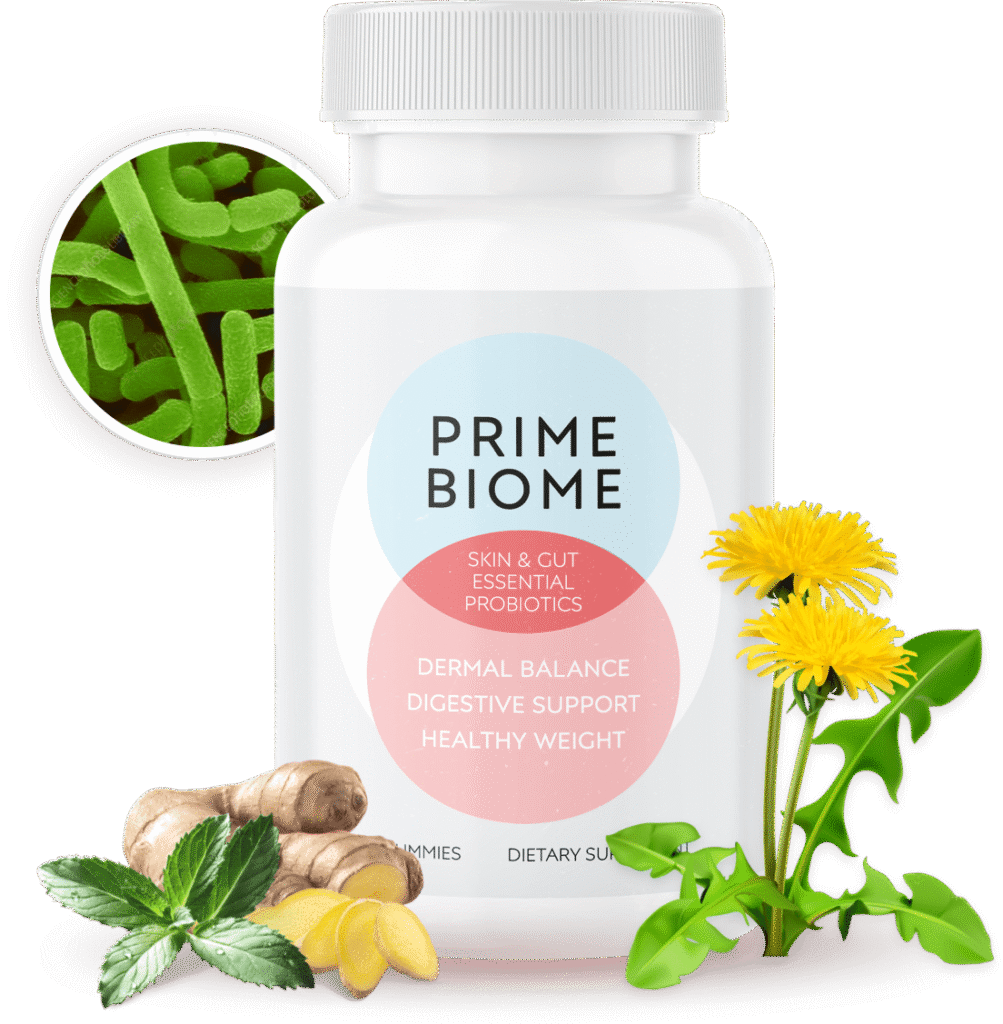
PrimeBiome is specifically formulated to support the gut-skin axis with:
B. Coagulans: Probiotic strain proven to reduce skin inflammation and support the skin barrier
Organic Ceylon Ginger: Powerful anti-inflammatory that calms gut inflammation (which shows up as skin inflammation)
Inulin: Prebiotic fiber that feeds beneficial bacteria so they can colonize effectively
Babchi & Dandelion: Support skin cell turnover and detoxification—helping your skin renew itself faster
Lion’s Mane: Supports gut-brain-skin axis communication (stress affects your gut, which affects your skin)
Fennel & Lemon Balm: Calm digestive inflammation and support a healthy gut lining
Slippery Elm Bark: Soothes and repairs the gut barrier, preventing inflammatory particles from reaching your skin
Unlike generic probiotics, PrimeBiome targets the specific bacterial imbalances that cause skin problems. Every ingredient is chosen to support both gut health and skin radiance.
Plus 3 FREE bonuses: 🎁 Cellulite Elimination Guide
🎁 Hair Growth Secrets
🎁 Teeth Whitening Tricks
Frequently Asked Questions
How long until I see results in my skin?
Most people notice initial improvements (less redness, fewer breakouts) within 3-4 weeks. Significant transformation typically occurs at 8-12 weeks as your skin cell turnover cycle completes. For best results, commit to 90 days.
Remember: it took years to damage your gut bacteria. Give your body 3 months to fully heal.
Can I use probiotics with my current skincare routine?
Absolutely! Probiotics work from the inside out, so they complement your topical skincare. In fact, when you fix your gut, your expensive skincare products will finally work the way they’re supposed to.
Think of it this way: topical products can only do so much when your skin is being damaged from within. Fix the internal problem, and your external treatments become 10x more effective.
Will probiotics help with acne scars?
While probiotics won’t eliminate existing scars, they dramatically improve skin cell turnover and collagen production—which helps scars fade faster and prevents new scarring from forming.
Many users report that old acne scars fade significantly after 4-6 months of consistent probiotic use.
I have sensitive skin. Are probiotics safe?
Yes! Unlike harsh topical treatments, probiotics work gently from within. There’s no risk of irritation, burning, or allergic reactions on your skin. Some people experience mild digestive adjustment in the first week (slight bloating or gas), but this quickly resolves as your gut rebalances.
Do I need to change my diet?
No strict diet required. However, reducing sugar and processed foods will accelerate results since these feed harmful gut bacteria. Focus on adding fermented foods (yogurt, sauerkraut, kimchi) to support your probiotic supplementation.
The good news? Once your gut bacteria rebalance, sugar cravings typically disappear naturally.
What about hormonal acne?
Gut bacteria directly influence hormone metabolism, particularly estrogen. Many women find that probiotics help balance hormones naturally, reducing hormonal acne—especially around the jawline and chin.
This is especially effective for women over 35 whose hormonal acne won’t respond to topical treatments.
How is this different from eating yogurt?
Yogurt contains beneficial bacteria, but not nearly enough to rebalance a damaged gut microbiome. You’d need to eat 10+ servings daily to match the therapeutic dose in a quality probiotic supplement.
Plus, most commercial yogurts are loaded with sugar, which feeds harmful bacteria and cancels out the benefits.
The Bottom Line
Your skin problems don’t start in your skin—they start in your gut. When you address the root cause instead of just treating symptoms, transformation is inevitable.
Thousands of women have discovered that the secret to radiant skin isn’t in a $200 jar of face cream. It’s in restoring the gut bacteria that control inflammation, collagen production, and skin cell renewal.
The science is clear. The results are real. And the approach is sustainable—no harsh chemicals, no painful procedures, no temporary fixes that wear off.
Stop Treating Your Skin. Start Healing Your Gut.
Join thousands of women who discovered the secret to radiant skin isn’t in a jar—it’s in your gut.
GET PRIMEBIOME NOW → https://primebio.me/en-us/]
✓ 60-Day Money-Back Guarantee
✓ Free Shipping (United States)
✓ 3 Free Bonus E-books ($67 value)